Back to Case Studies
3 months UI/UX Designer

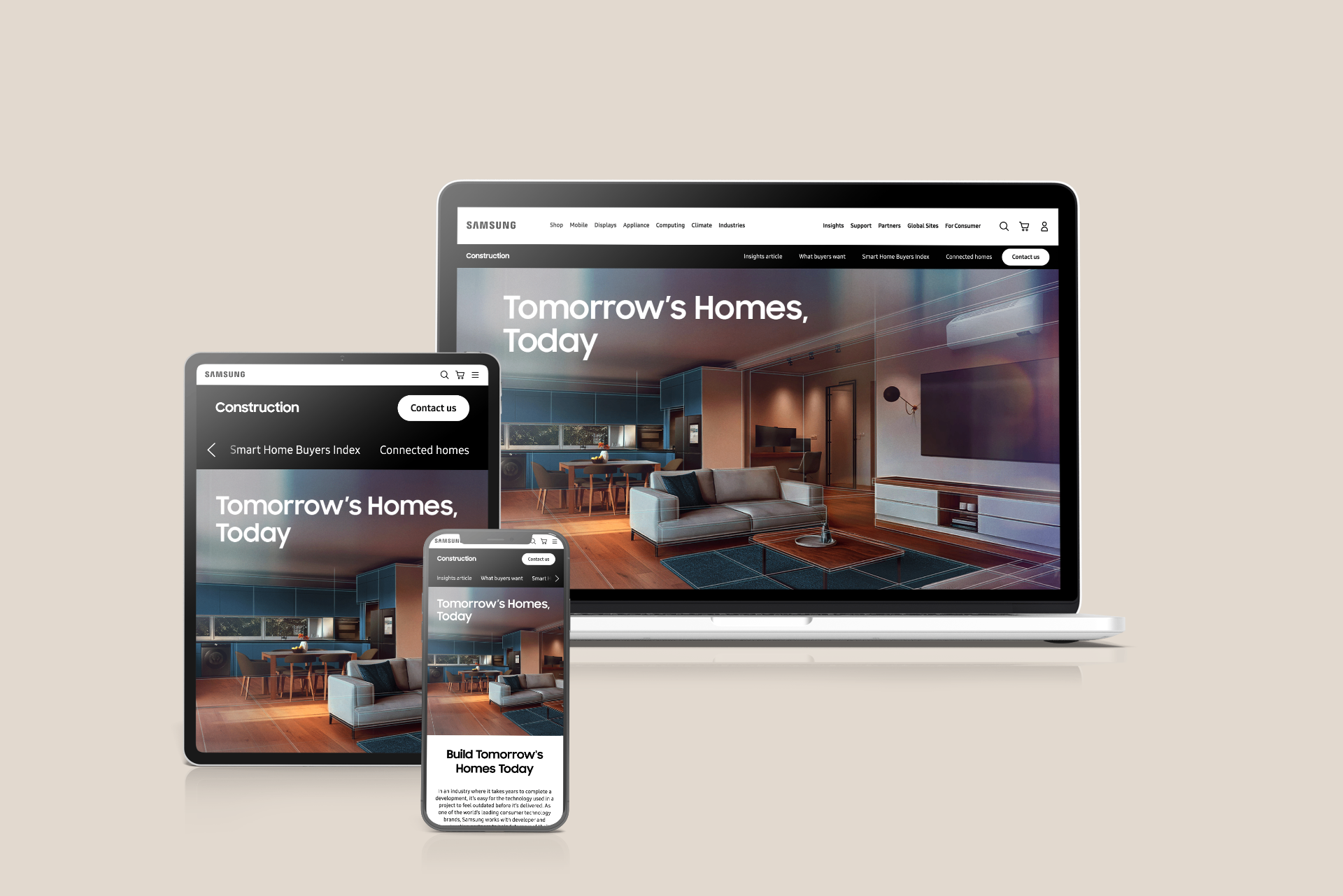
Samsung B2B Lead Generation Page

Repositioning Samsung From Vendor to Strategic Partner

Samsung's existing B2B digital presence struggled to resonate with senior decision-makers in the Construction and Private Rental Sector (PRS). The experience focused heavily on product features, positioning Samsung as a supplier rather than a long-term strategic partner.

Samsung B2B Lead Generation Page

The Challenge

"Samsung's current B2B presence doesn't speak to our specific needs in construction and PRS. We need partners who understand our industry challenges—not just suppliers pushing products." — David Chen, Construction Project Manager

User Challenges

  • Generic, product-led messaging failed to resonate with senior B2B decision-makers
  • Lack of industry-specific value propositions reduced trust and engagement
  • Lead forms felt transactional and sales-driven
  • Partnership stories and collaborative strengths were underrepresented

Business Challenges

  • Missed opportunities to capture high-intent B2B leads
  • Low differentiation in a competitive enterprise landscape
  • Weak positioning as a strategic, long-term solutions partner

My Role

  • UX & UI Designer

Team Size

  • 6 members (cross-functional)

Tools Used

Figma Miro Notion Design System Tools

Collaboration

  • Samsung Marketing Team
  • Business Stakeholders
  • B2B Strategy Team

Project Status

Design concept validated through stakeholder feedback and industry research

Solution Vision

Transform Samsung's B2B presence from a product showcase into a consultative partnership platform—one that demonstrates industry expertise, builds trust, and guides users toward meaningful engagement without feeling sales-driven.

Design Goals

  • Position Samsung as a strategic partner, not a vendor
  • Communicate industry understanding and credibility
  • Improve lead quality over lead quantity
  • Align UX decisions with Samsung's broader business objectives

Design Process

Research → Insights → Ideation → Solution → Results

01

Research: Understanding Business Alignment

Research Objective

To understand Samsung's internal business goals alongside the expectations of Construction and PRS decision-makers, ensuring the solution aligned both strategically and commercially.

Research Methods

  • Stakeholder interviews: Collaborated with Samsung's internal teams to understand business objectives, success metrics, and competitive positioning
  • Target audience analysis: Researched decision-makers within construction firms, developers, and architectural practices to identify partnership criteria and pain points
  • Competitive analysis: Audited competitor B2B pages to identify common gaps, messaging weaknesses, and opportunities for differentiation
  • Content strategy review: Analysed existing Samsung content to identify where messaging lacked clarity, relevance, or industry focus
Stakeholder Management & Cross-Functional Collaboration

Facilitated cross-department workshops with Samsung's B2B marketing, sales, and technical teams, aligning diverse stakeholder perspectives to transform the platform from a product catalogue into a consultative partnership tool.

Competitive Analysis
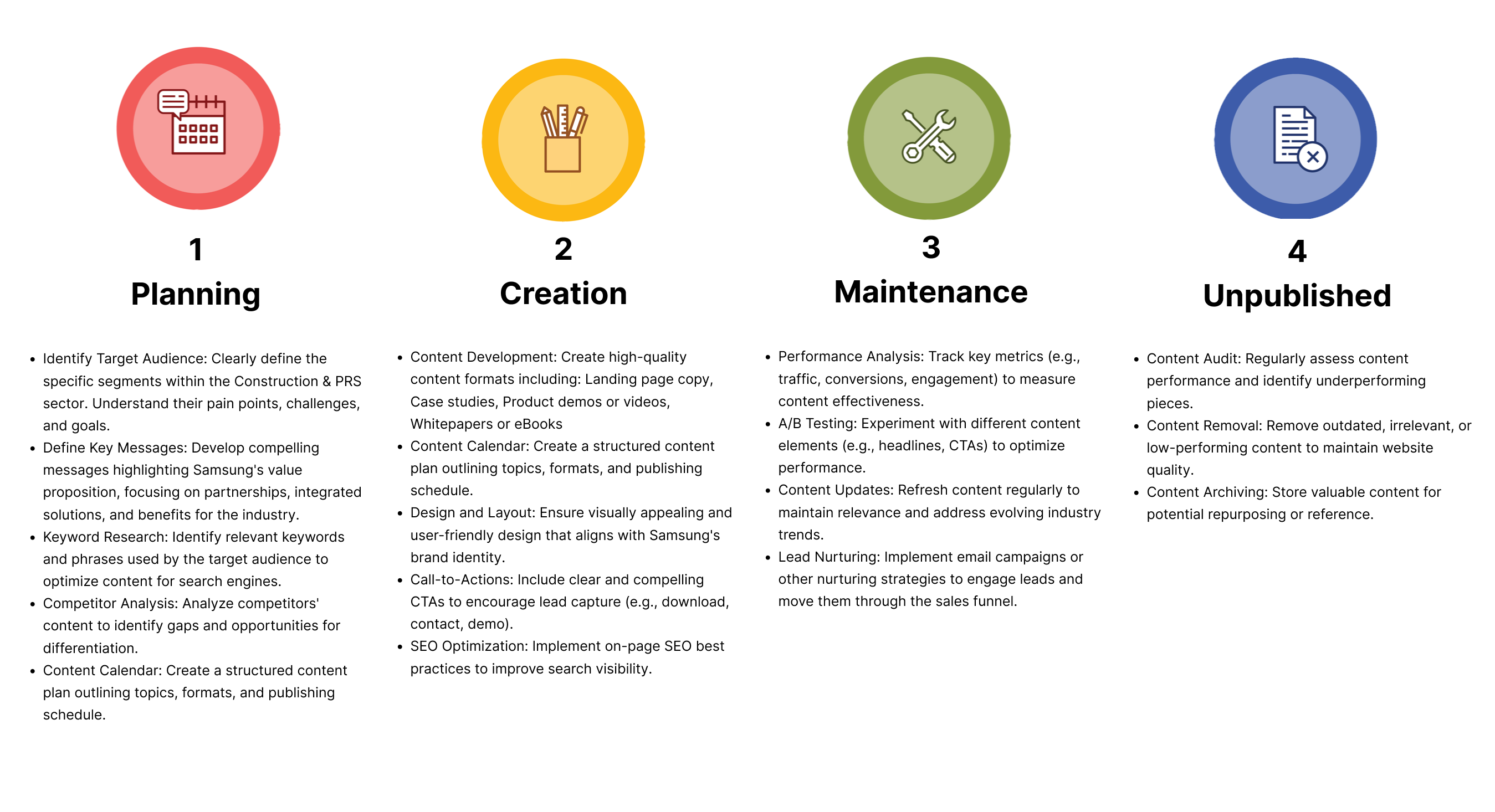
Content Strategy Breakdown
"We need Samsung to position themselves as a strategic partner who understands our long-term vision—not just another vendor selling individual products." — Sarah Williams, PRS Development Director

Research Scope & Constraints

Due to limited access to live analytics and CRM data, research focused on qualitative insights, stakeholder alignment, and competitive benchmarking. Assumptions were validated through iteration and feedback rather than real-world deployment.

Research Synthesis & Key Insights

1

Senior stakeholders value clarity, trust, and partnership credibility over technical specifications

2

Industry-specific narratives resonate more strongly than generic product messaging

3

Competitors underutilised real partnership stories—creating a clear opportunity for Samsung to differentiate

These insights confirmed that the core challenge was strategic positioning, not visual execution.

02

Insights: Defining the Strategic Challenge

Problem Statement

How might Samsung reposition its B2B digital presence to clearly communicate partnership value, industry understanding, and long-term collaboration—while still supporting lead generation goals?

Design Questions

How might Samsung be positioned as a strategic solutions partner rather than a vendor?
How might leads be captured without undermining trust?
How might Samsung differentiate itself in a crowded B2B landscape?

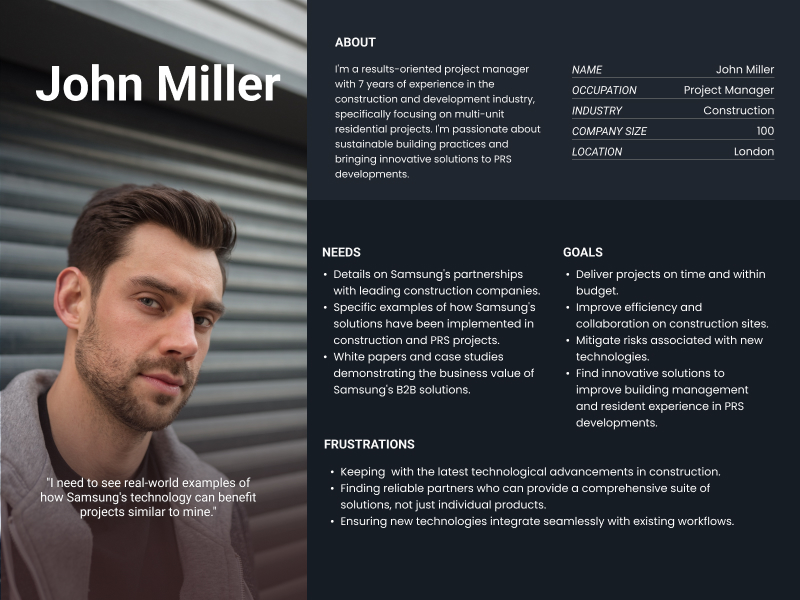
User Persona

Primary Persona: Mid-to-Senior B2B Decision-Maker
  • Time-poor and outcome-focused
  • Skeptical of sales-led messaging
  • Values credibility, proof, and long-term collaboration
  • Frustrated by generic content and unclear value propositions

Design Implication: Because this audience prioritises trust and relevance over exploration, I deprioritised product grids and promotional messaging in favour of scannable narratives, proof points, and consultative calls-to-action.

User Persona - John Miller
03

Ideation: From Strategy to Structure

Ideation Approach

  • Explored multiple narrative and structural page concepts
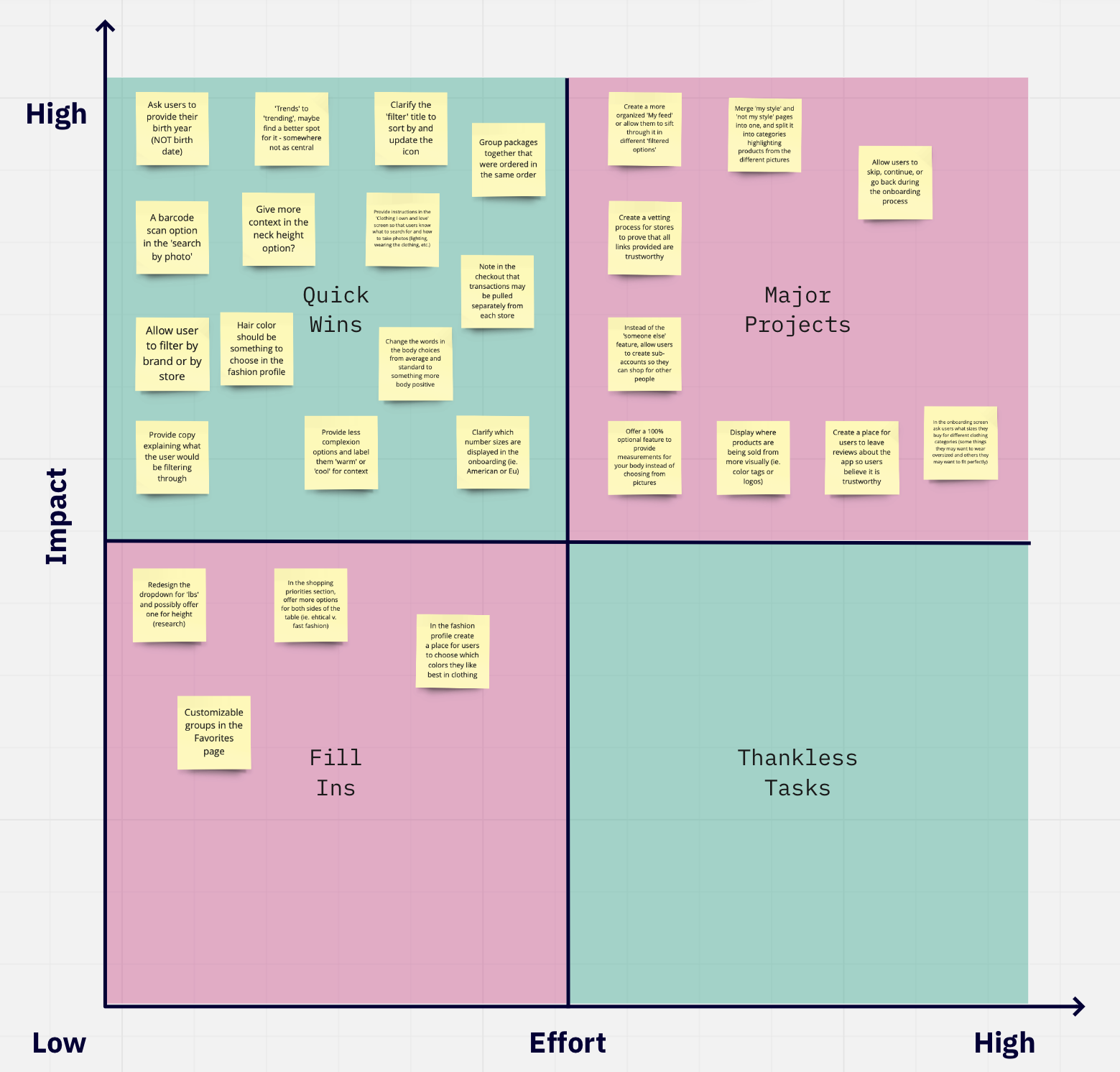
  • Used a value vs. effort matrix to prioritise concepts aligned with business impact
  • Focused on creating a page that felt consultative, not promotional
Wireframe Sketches
Ideation Board

Key Tradeoffs Considered

  • ❌ Aggressive lead-capture forms → risked eroding trust
  • ❌ Feature-heavy product sections → reinforced vendor perception
  • ❌ Sales-driven language → conflicted with partnership positioning

The final approach focused on clarity, credibility, and restraint.

Core Features Prioritised

🤝
Partnership Storytelling

Real-world case studies demonstrating collaboration and shared success

💡
Solution Overviews

Industry-specific value propositions addressing construction and PRS challenges

Trust Indicators

Client testimonials, certifications, and proof points

📚
Educational Content

Thought leadership and industry insights to position Samsung as an authority

🎯
Strategic CTAs

Consultation-focused calls-to-action rather than immediate sales prompts

📋
Smart Lead Qualification

Forms designed to segment prospects by project needs and intent

Each feature balanced user trust with business objectives.

Information Architecture

A clear, linear information structure was designed to guide users from:

  • Industry context
  • Partnership value
  • Proof and credibility
  • Meaningful engagement

This ensured intuitive navigation and minimal cognitive load for busy decision-makers.

Information Architecture Board
04

Solution: Design & Validation

Design Principles

  • Consultative, not promotional
  • Credibility over persuasion
  • Clarity over cleverness
  • Conversion without pressure

Design Evolution

Low-fidelity wireframes tested narrative flow and hierarchy. Iterative stakeholder reviews refined messaging and emphasis. High-fidelity designs aligned with Samsung's brand guidelines while reinforcing partnership positioning.

Design Iteration 1
Design Iteration 2
Design Iteration 3

High Fidelity Screens

High Fidelity Samsung B2B Page
05

Results: Impact & Next Steps

Usability Testing & Validation

Validation Conducted
  • Stakeholder walkthroughs
  • Content and hierarchy reviews
  • Feedback sessions aligned to business goals
Key Outcomes
  • Strong stakeholder alignment on partnership-focused messaging
  • Clear differentiation from competitor B2B pages
  • Intuitive navigation requiring minimal explanation
  • Visual hierarchy effectively guiding users toward key actions
Improvements Made
  • Refined messaging based on stakeholder feedback
  • Strengthened visual storytelling for partnership case studies
  • Optimised form design for lead qualification
  • Improved mobile responsiveness for field-based professionals

Results: Impact & Next Steps

What Was Achieved

The final solution successfully repositioned Samsung as a trusted, industry-aware partner for Construction and PRS organisations—moving away from transactional product messaging toward relationship-driven engagement.

While not deployed live, stakeholders confirmed the design:

  • Better aligned with Samsung's strategic goals
  • Supported higher-quality lead generation
  • Provided a scalable framework for future B2B initiatives

Key Learnings

  • Partnership beats product: B2B audiences respond to relationship-driven narratives
  • Industry specificity matters: Tailored messaging builds credibility faster
  • Stakeholder alignment is critical: Collaboration strengthens strategic outcomes

Recommended Next Steps

Launch within Samsung's Business Industries section

Track engagement, form submissions, and lead quality

A/B test messaging and layout variations

Integrate with CRM for lead nurturing and measurement

Client Testimonial

"Andrew transformed how we present ourselves to B2B clients. He facilitated workshops across our marketing, sales, and technical teams, turning conflicting priorities into a unified vision. The new platform positions us as strategic partners, not just vendors. Our sales team reports that prospects spend significantly more time engaging with our content, and the quality of leads has noticeably improved."

Michael Chen
B2B Marketing Director, Samsung Electronics

Final Reflection

This project demonstrated how strategic UX design can reshape business positioning and digital communication in complex B2B environments. By focusing on partnership value rather than promotion, the solution created a foundation for more meaningful, long-term business relationships.

The most validating feedback came from stakeholders who said:

"This finally positions us as the strategic partner we want to be—not just another vendor."

This case study reinforced my belief that strong B2B UX sits at the intersection of business strategy, user trust, and authentic storytelling.