Harrods Pre-Order Feature
85% reduction in support queries. 100% task completion in usability testing. A luxury pre-order experience that Harrods stakeholders described as exceeding expectations — designed and delivered in 8 weeks.
Designing a luxury-grade pre-order experience — giving high-intent customers a way to reserve coveted products before launch, while unlocking demand forecasting for the business.
Design Process
How I approached this project
A missing capability costing loyalty and revenue
Harrods had no pre-order capability. For limited-edition and high-demand products — where exclusivity and guaranteed access are core to the luxury proposition — this was a critical gap. High-intent customers were repeatedly missing launches, leading to frustration, repeated availability-checking, and missed conversion.
The business was also unable to forecast demand for limited releases, making inventory management reactive rather than planned.
"I missed out on the limited-edition bag I wanted because I didn't know when it would be available. By the time I heard about it, everything was sold out. There should be a way to reserve items in advance."
— Emma Thompson, Luxury ShopperThe design challenge was not just adding a pre-order button. It was making the entire experience feel effortless and exclusive — a luxury service, not an ecommerce transaction.
Understanding the luxury mindset
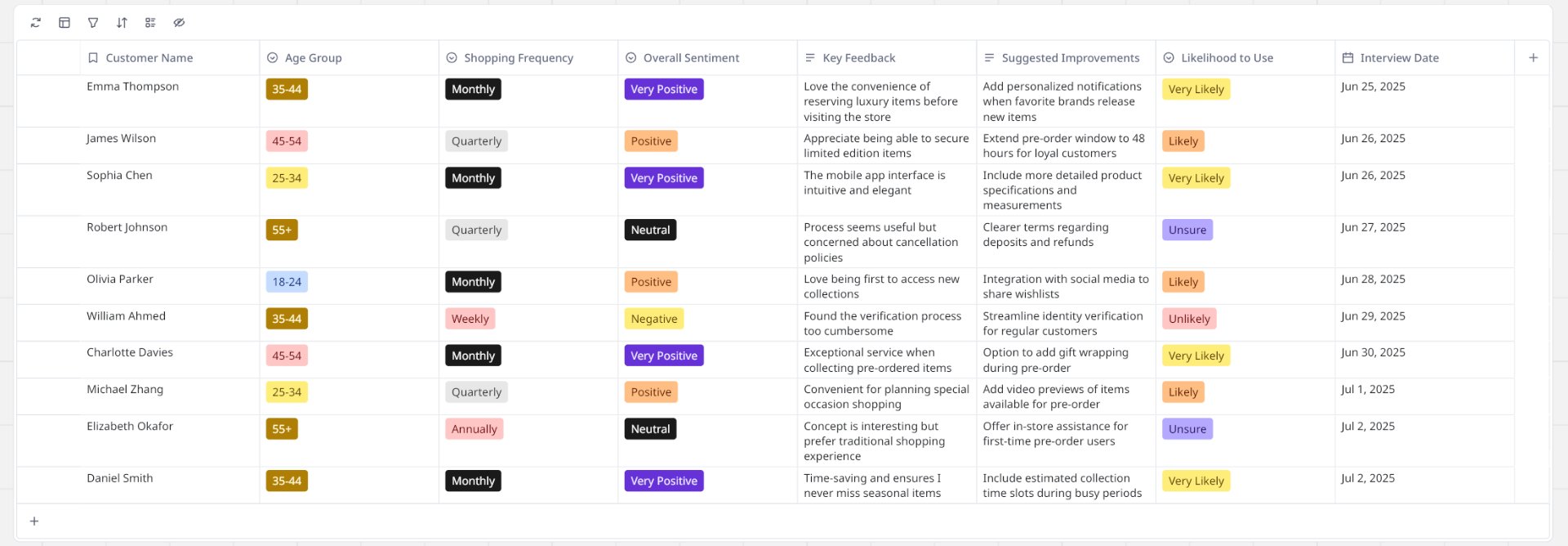
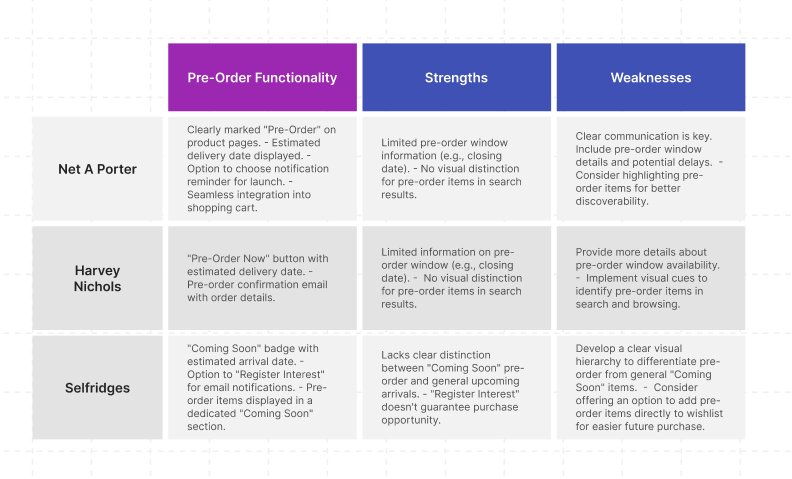
I used qualitative interviews with Harrods customers across segments, mapped limited-edition purchase journeys using analytics to identify friction and drop-off moments, and conducted competitive analysis of luxury pre-order patterns.
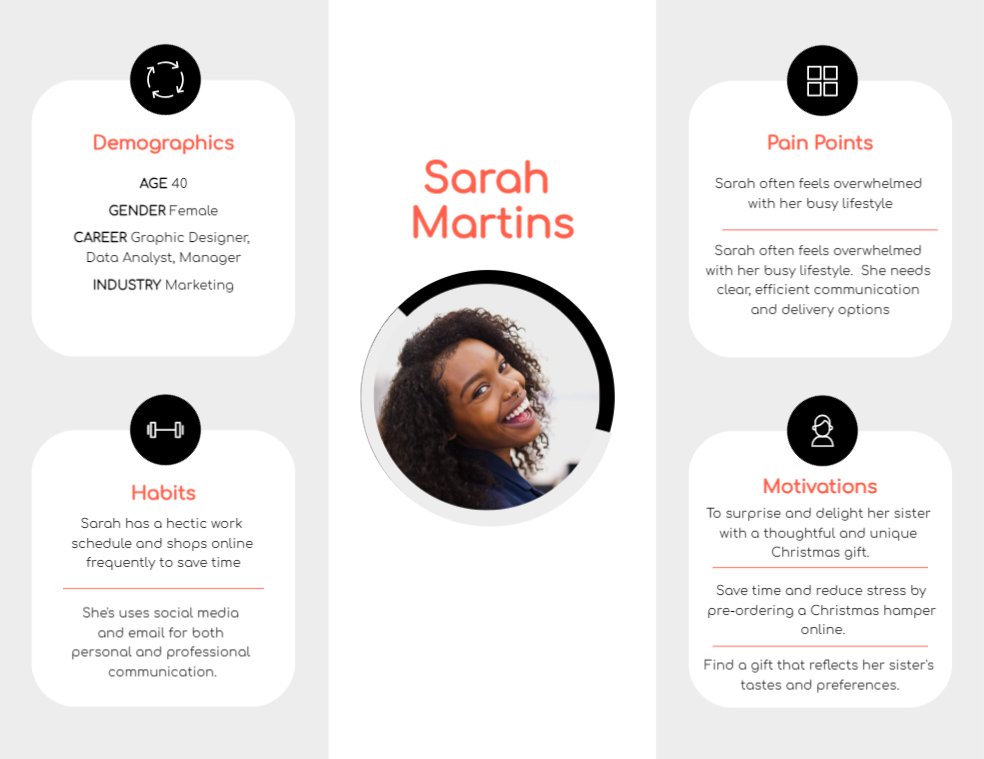
I anchored design decisions around a high-value luxury shopper persona — time-poor, experience-led, and skeptical of anything that feels transactional.
From problems to elegant solutions
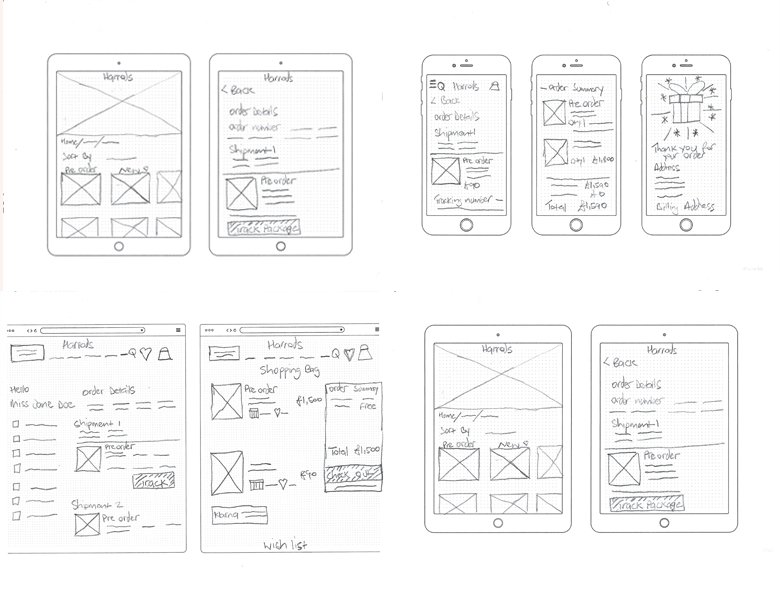
Using Crazy 8s and rapid sketching, I explored different reservation models, then applied a value-vs-effort matrix to prioritise concepts that enhanced exclusivity and integrated seamlessly into Harrods' existing shopping flows.
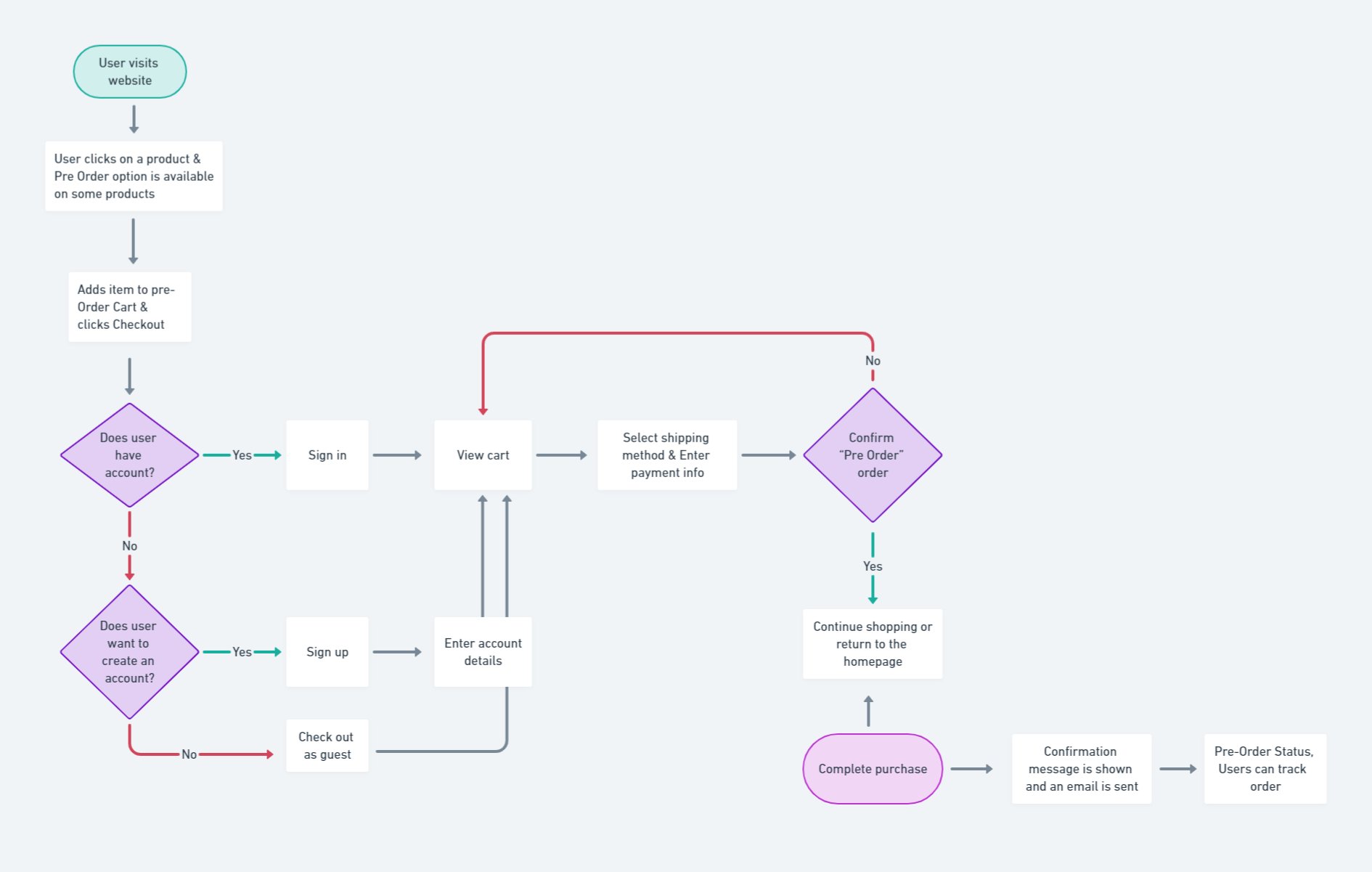
The six core features I prioritised:
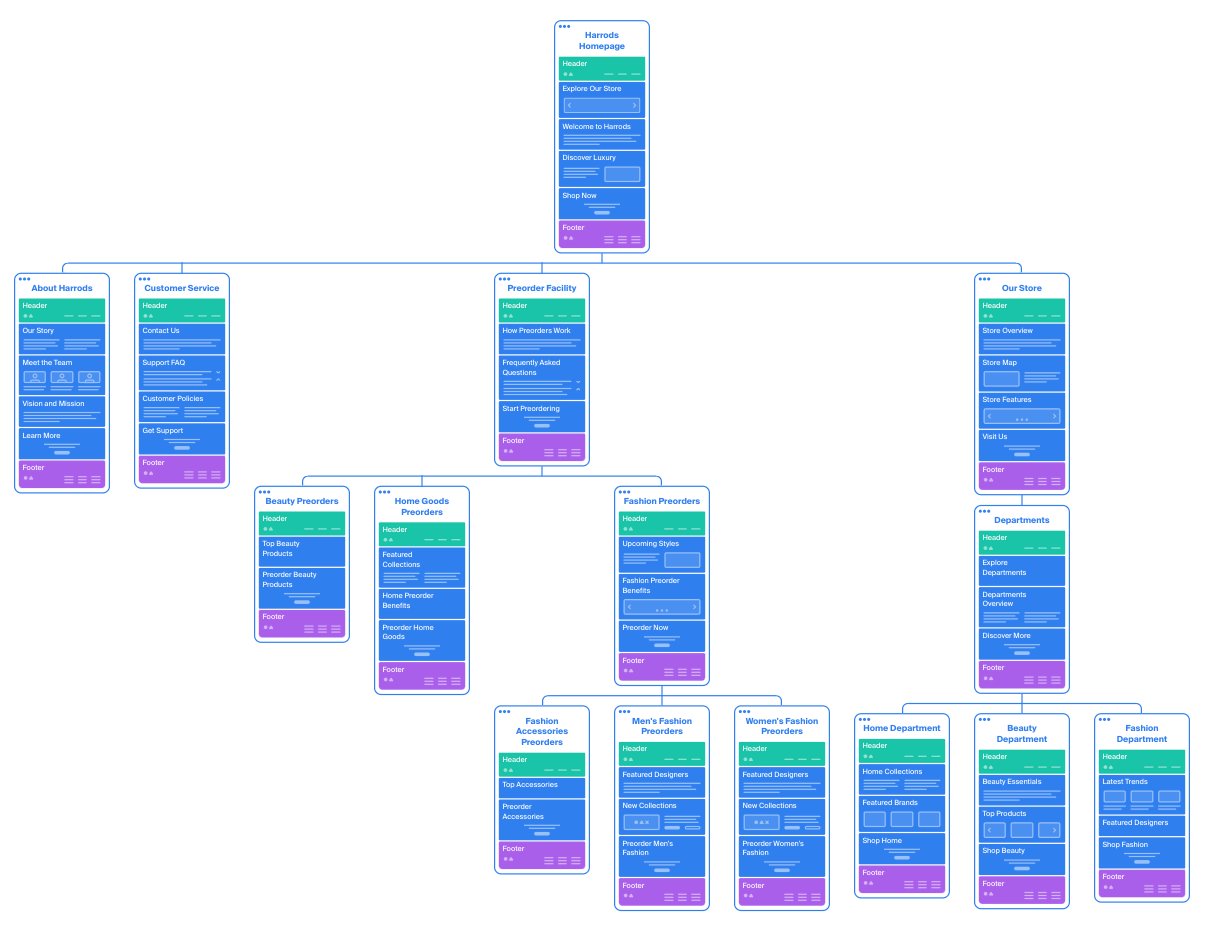
The key decision: I chose to integrate the reservation flow directly into the existing product page rather than building a standalone pre-order section. Stakeholders initially pushed for a separate hub — but research showed that any friction or 'different' experience at the moment of intent immediately eroded the premium feeling Harrods customers expect. Seamlessness was the luxury feature.
I integrated pre-ordering into Harrods' existing structure to ensure intuitive navigation and minimal cognitive load.
Design & validation
I started with low-fidelity wireframes to validate flows, hierarchy, and terminology before applying any polish. Accessibility (WCAG 2.2 AA) was baked in from the start — not added after.
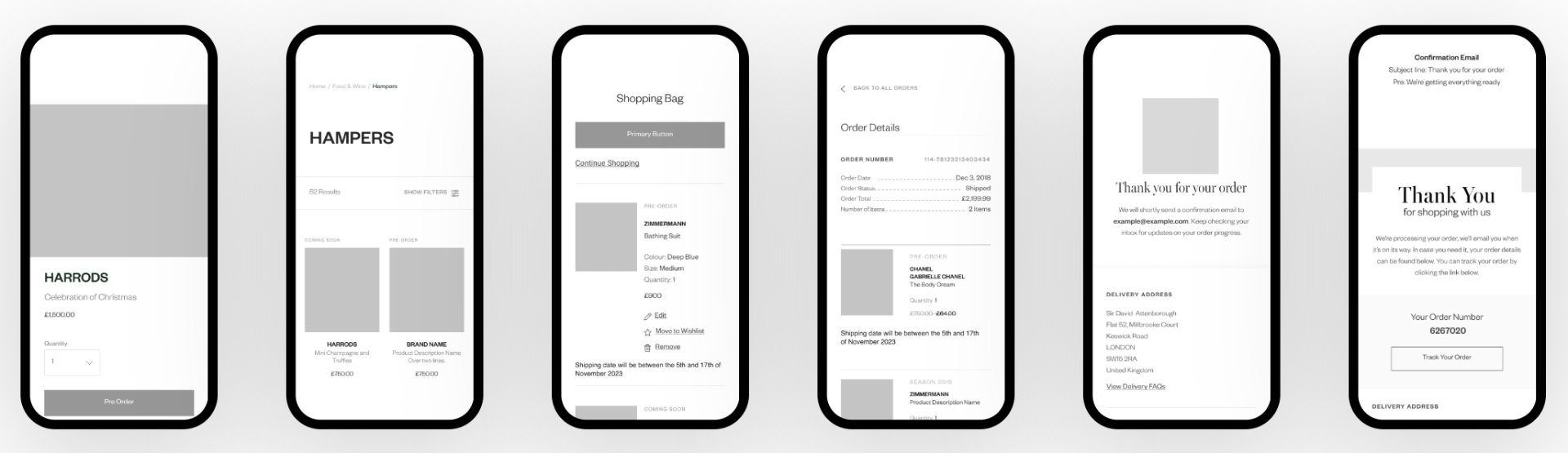
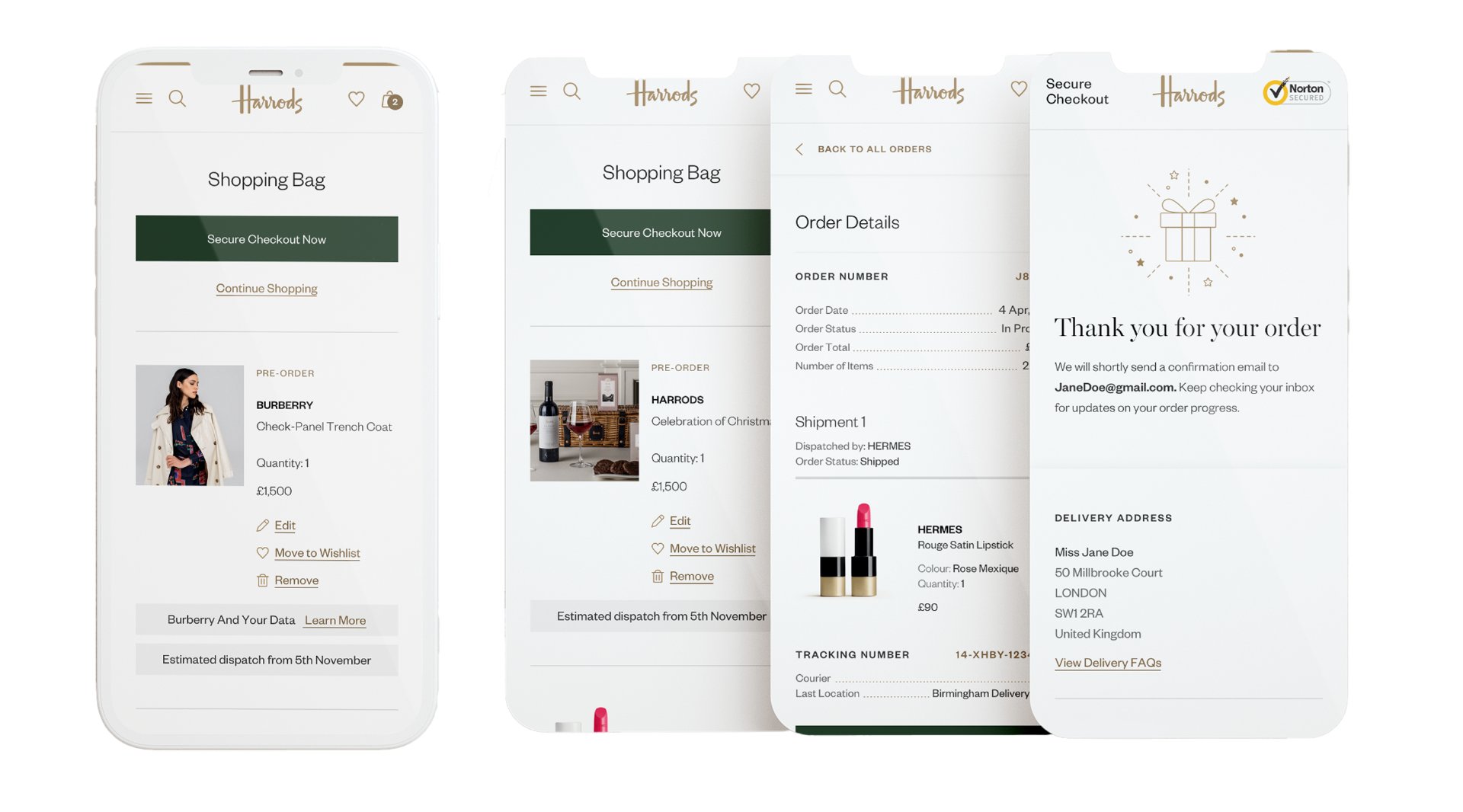
The final high-fidelity designs delivered a complete end-to-end mobile experience — product discovery through to shipment confirmation. Scroll inside each screen to explore the full content.
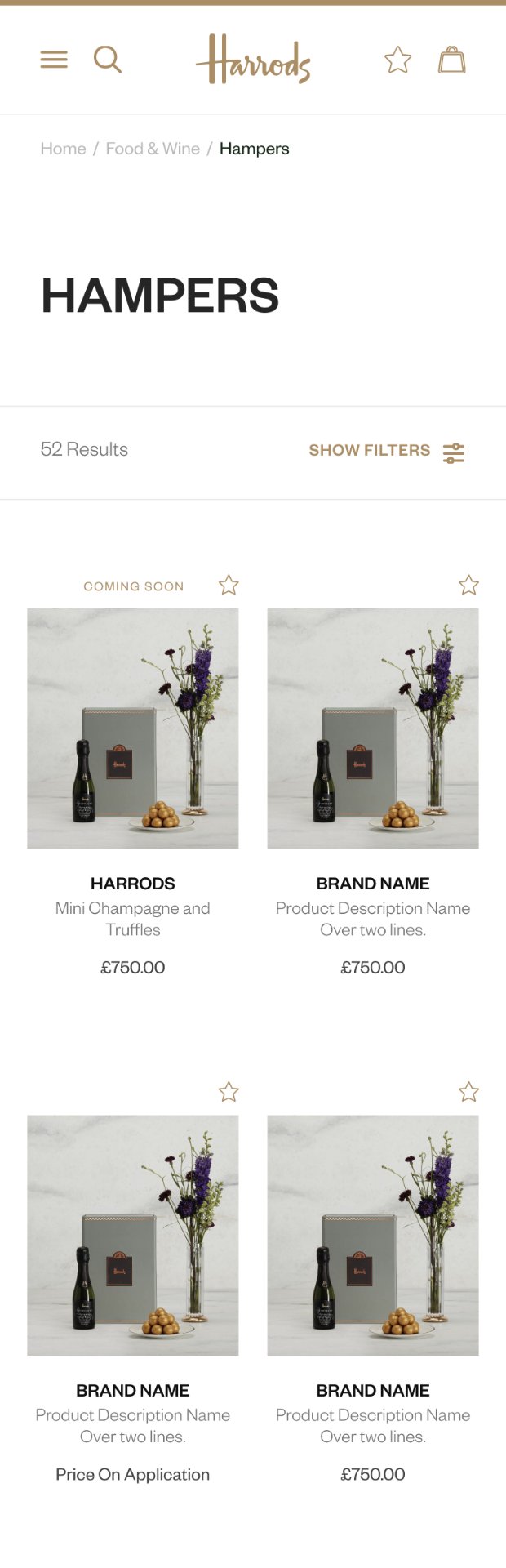
Product Listing
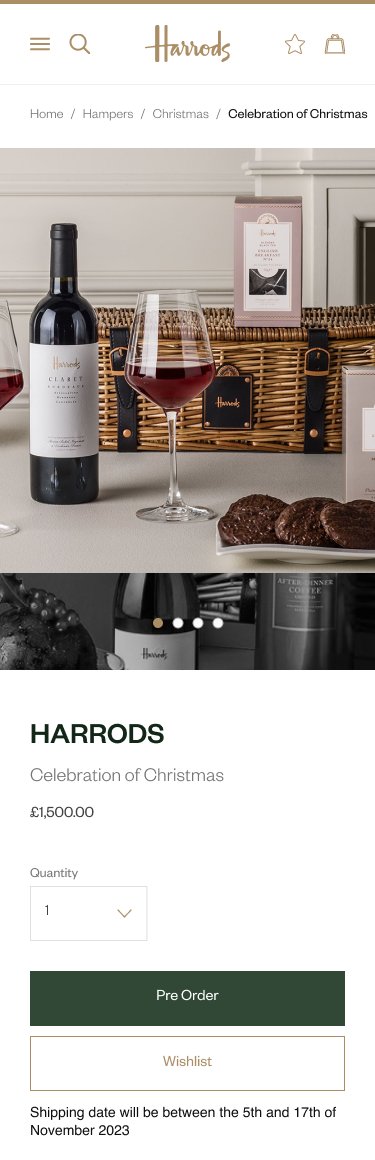
Product Detail & Pre-Order
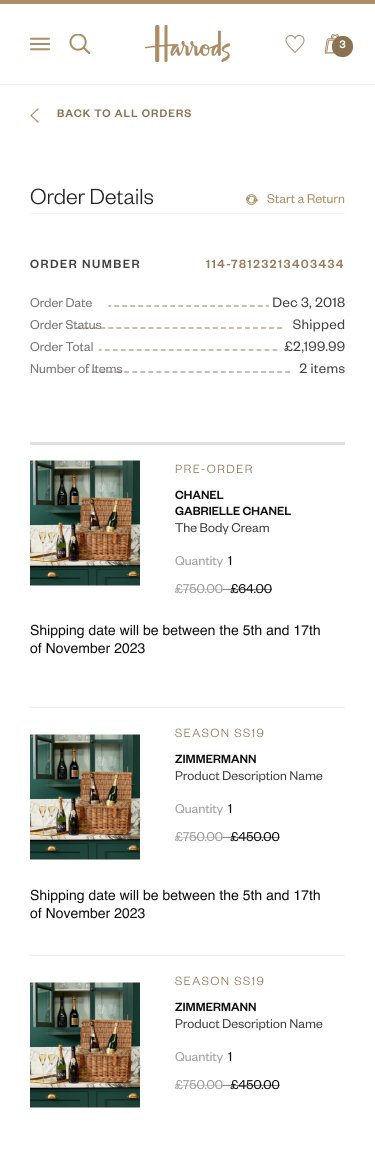
Order Details
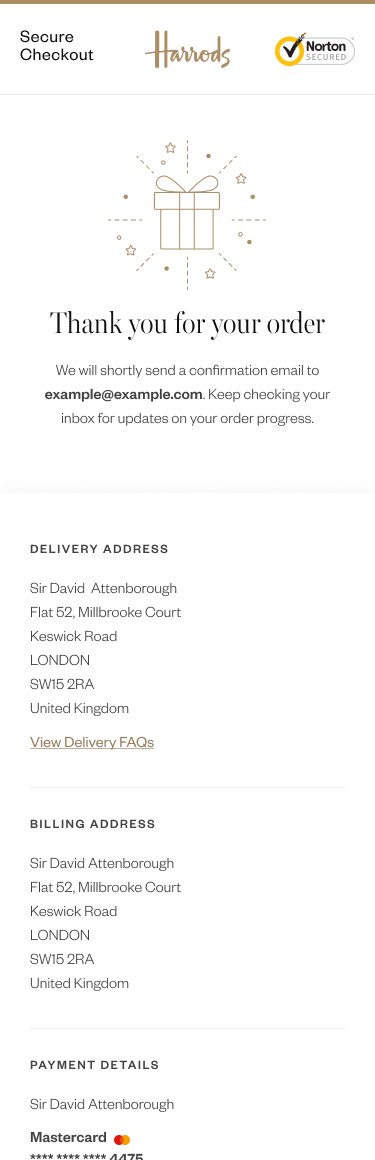
Order Confirmation
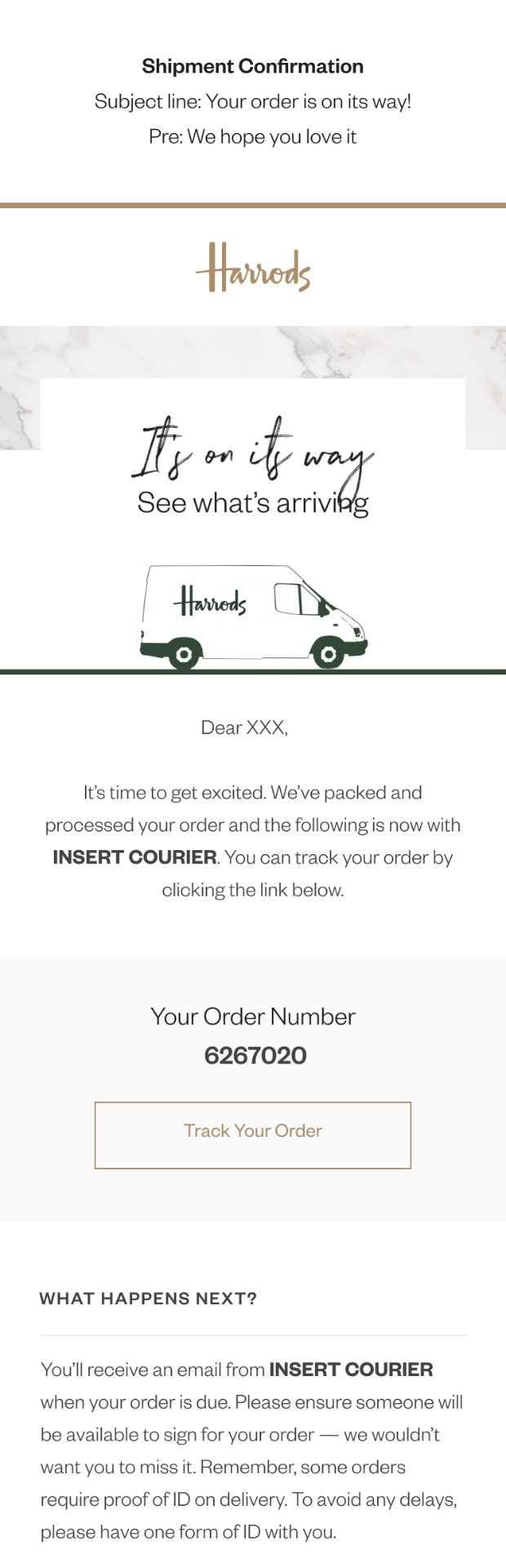
Shipment Email
Measurable impact, luxury experience intact
Before
After
"Andrew brought a level of sophistication to our pre-order feature that truly reflects the Harrods brand. He balanced luxury aesthetics with functional clarity, working closely with our stakeholders to navigate strict brand guidelines. The result exceeded our expectations — customers love the seamless experience, and our team has seen a dramatic reduction in manual processing."
Takeaways
What I learned
Luxury requires simplicity. Removing friction enhances perceived value. Every unnecessary step erodes the premium feeling.
Early access drives loyalty. Exclusivity strengthens emotional connection — customers don't just want the product, they want to feel like they got it first.
Accessibility is non-negotiable. WCAG 2.2 AA compliance was achieved without compromising a single aspect of the luxury aesthetic — the two are not in conflict.
Stakeholder alignment was critical. Working in an agile, cross-functional environment with commercial, tech, and brand teams required structured workshops and iterative communication throughout — not just at handoff.